Real and Fake Medications and Treatments

Share:

Table of Contents

NUMEROUS MEDICATIONS AND treatments have been touted to relieve or even “cure” ALS. I urge extreme caution. We found that many did nothing for our son, Jeremy. They certainly didn’t cure him. Still, through trial and error, we discovered several medications and treatments that did give him some relief.

Drugs approved for ALS

As of this writing (March 2024), there are four approved drugs (one of which is available in three different formulations, besides a generic version) designed specifically for ALS:

Nuedexta

A binary drug for the treatment of pseudobulbar effect (involuntary, sudden, and frequent episodes of crying or laughing). Our son took this on a regular basis. More information here.

Riluzole

The generic name for the same medicine prescribed in three different formulations: 

Tiglutik: oral suspension

Rilutek: oral tablet

Exservan: oral film, designed to dissolve on the top of the tongue

This drug delays the onset of ventilator dependence or tracheostomy in some people and may increase survival by two to three months. 

Our son took Riluzole on a regular basis. More information here.

Radicava

Edaravone, to slow the loss of physical function. Our son did not take this. https://www.radicava.com/patient/.

Qalsody 

A brand name. The generic is tofersen. It is used to treat ALS in adults who have a mutation in the superoxide dismutase 1 (SOD1) gene (for familial ALS). https://www.qalsody.com

Drugs not FDA approved

Relyvrio (AMX0035)

Amylyx Pharmaceuticals announced on March 8, 2024, that its drug for ALS, called Relyvrio (Albrioza in Canada), did not show significant benefit in a large clinical trial and may be withdrawn from the market.

Our son did not take this.

This binary drug, made by Amylyx, went by the name AMX0035 while it was in clinical trials. It is a combination of taurursodiol (TUDCA) and sodium phenylbutyrate (SPB). The FDA initially gave a thumbs-down to the clinical trial results, but then grudgingly did a 180 in September 2022 after a lot of pressure from ALS victims.

But the FDA wanted better data, and on March 8, 2024, Amylyx announced that the drug was ineffective.

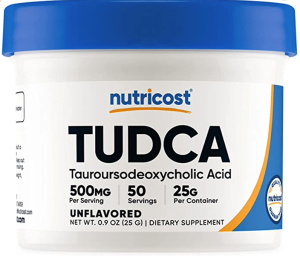
TUDCA is easily available in 25 gm jars online (see below). SPB is obtained through prescription only. In 2020, our pharmacy quoted us $10,000 for a small amount of SPB. Insurance wouldn’t cover it. The doctor wrote an off-label prescription for it, but we never got it filled.

ALS patients began getting a hold of SPB and caused a shortage for those suffering from urea-cycle disorders, which was the original purpose of the drug. There’s no justification for the rip-off price of the SPB—it isn’t a complicated molecule.

People are trying to buy the two separately and combine them, but I don’t know how successful they have been.

Our son got a prescription for an oral liquid version of SPB from a specialty pharmacy in Georgia. It arrived leaking and poorly labeled and tasted terrible. SPB has side effects, which scared him away from it.

Other ALS patients on Relyvrio who complained of the lousy taste and stomach issues got the combination. Some insurance companies did cover it.

NurOwn

NurOwn was in an FDA-approved clinical trial, but it wasn’t approved for patient treatment.

Our son was in the Brainstorm Cell Therapeutics clinical trial for their NurOwn treatment for ALS. We drove from New Jersey to the University of Massachusetts Memorial Medical Center (about four- to six-hour-long trips, depending on traffic) for treatments  or examinations 16 times. Some early visits were only 30 minutes long with no medical procedures, just questions.

The medical procedures consisted of removing spinal fluid (a spinal tap), staying in a nearby hotel overnight to rest, and then going back home while the fluid was treated. A couple of weeks later, we would return to the hospital so they could put it back into our son’s spine (another spinal tap).

We had to drive back to the hospital again for follow-ups, more spinal taps, or tests. We saw no improvement or changes. We found out after the trial ended that our son had gotten the placebo. It turned out that the results of the nationwide trials showed that the procedure wasn’t effective anyway. The FDA nixed the procedure.

An online article in “Biopharmadive” published on October 18, 2023, reported that Brainstorm withdrew its application for FDA approval of its NurOwn cell therapy. According to the FDA group of advisers, there hadn’t been enough evidence to demonstrate NurOwn’s effectiveness in treating mild to moderate ALS.

A number of people posted angry comments in the Facebook ALS group “ALS – Patient and Caregiver tips for every day living” against the FDA for rejecting the NurOwn treatment. But the NurOwn results were not “statistically significant” compared to the placebo, meaning the people who got the placebos showed close to the same results as those who got the real treatment.

That is why the FDA didn’t approve it: the results couldn’t prove the treatment did anything. Here is another way of putting this: The people who got the real treatment and showed positive results might have shown positive results if they had gotten the placebo instead. If you were to get the real treatment, you may or may not show any improvement.

Yes, there were some positive results, but there were about the same number of positive results for the placebo patients. Some of the patients in the NurOwn trial were self-medicating with their own over-the-counter medications, like our son, so who knows if outside influences skewed the results. Jeremy got the placebo. And there was no improvement.

An article from January 6. 2025 entitled “BCLI: Plans Coming Together For Phase 3b Trial Of NurOwn® In ALS…” (https://scr.zacks.com/news/news-details/2025/BCLI-Plans-Coming-Together-for-Phase-3b-Trial-of-NurOwn-in-ALS-article/default.aspx) said that “BrainStorm remains on track to initiate the Phase 3b trial of NurOwn in ALS patients as the regulatory aspects of the program have been de-risked through reaching alignment with the FDA on the CMC aspects of the trial and having a SPA in place.”

Other medications and treatments

TUDCA

Our son was taking TUDCA powder (see photo below): 1 gm in his morning meds and 1 gm in his evening meds. This was before AMX0035 appeared on the scene (see “Relyvrio” below). 

TUDCA is a steroid, but ALS victims shouldn’t be concerned about this. One Facebook member began harassing me when I posted that it was a steroid because she wouldn’t believe that fact. I finally had to block her.

Jeremy began taking TUDCA way before I was aware of AMX0035, but maybe he already knew about it. He bought 25 gm jars online. That was cheaper than buying 500 mg capsules. 

I had some issues with the quality of TUDCA from NutriCost. I found a small dark object in one jar, which they replaced (they didn’t even want the object, which was strange, so they probably repackaged TUDCA only and didn’t manufacture it). 

Also, hard TUDCA nuggets were in every jar, but our blender method dealt with those. Don’t try using a pill crusher or mortar and pestle because the powder will just “squash,” so you will have to scrape it off the device.

CuATSM

Our son was buying the very expensive copper-containing medicine CuATSM, which was being tested in clinical trials for ALS treatment in Australia only and maybe New Zealand.

CuATSM is used in combination with sodium gluconate. The whole supply chain providing CuATSM was very mysterious. I could not find any concrete information about who made the med or where it came from. Our son had to pay for it in Bitcoin. We still have about $6,000-$7,000 of it (about 20 gm!).

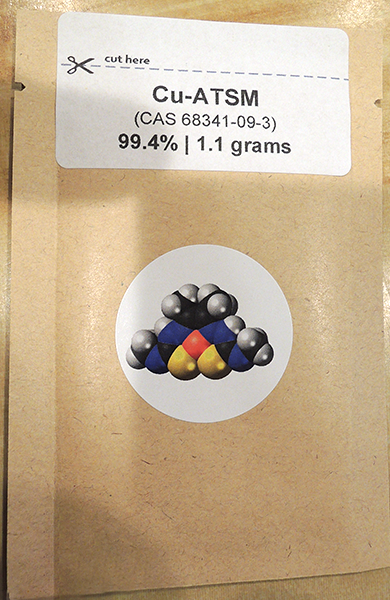
The CuATSM came in tiny envelopes, each containing 1.1 gm med, so each envelope had 15 dosages of 72 mg each. (see photo below). It was very dry and powdery and full of static electricity, so it was somewhat messy to work with.

I mixed this with the required amount of sodium gluconate and added it through our son’s feeding tube. I wrote to one of the principals overseeing the trials in early 2022 and again in late 2022, and he told me that the results should be on clinicaltrials.gov, but nothing’s been posted (2023).

Jeremy took it for a long time, but we didn’t see any improvement or slowing of symptoms. He was self-medicating. Our son was buying hope.

Note: The Australian website that originally touted CuATSM, https://www.mndaustralia.org.au, has dropped any mention of this chemical from its website, so I can safely assume the drug is no longer in trials.

cuatsm

Mucus remedies

Our son could not cough because of ALS, so we used various medications to help us pull out the mucus with the cough assist and suction machine.

Guaifenisin

Guaifenisin is an expectorant, which is supposed to loosen mucus and make it easier to cough it up  and clear the airways. It comes in pills and liquid form. A spoonful may deliver more than a tablet or capsule. It is popular with ALS patients, but it comes mixed with many other useless medications, so you should read the label and find a single-med version.

Mucinex is just high-priced guaifenisin. If you’re going to stick with that brand, try to avoid all the formulations with acetaminophen and decongestants. Likewise, avoid Vicks DayQuil and NyQuil. 

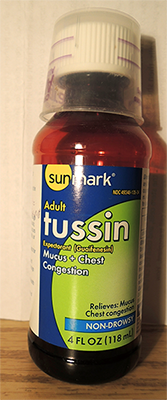
Jeremy tried Sunmark Adult Tussin (active ingredients: Guaifenesin/Dextromethorphan HBr), but I don’t believe it helped him much.

tussin
Simply Saline

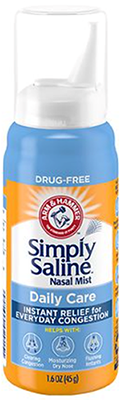
We sprayed this down the back of Jeremy’s throat to moisten the area before using the cough assist and suction devices.

simply saline
Albuterol (nebulizer)

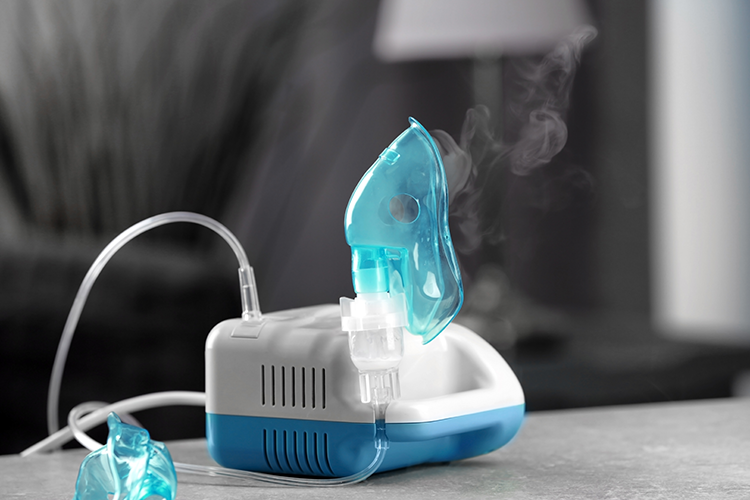
A nebulizer is a device that turns liquid medication into a mist, which is then inhaled through a mouthpiece or a mask. See photo below. Our son used this device with albuterol to try to loosen mucus. It was occasionally used in conjunction with N-acetylcysteine (NAC). The albuterol came in small plastic twist-off vials, and we poured it into the nebulizer and the mask was put in place on Jeremy.

The downside of the mask design was that the whole lower part of our son’s face became wet. The vapors didn’t just enter his nose and mouth.

This medication loosened the mucus so much that in the early stages of ALS he didn’t want or need the cough assist afterward. Unfortunately, the loosened fluids probably ran down into his lungs.

nebulizer
N-Acetylcysteine (nebulizer)

As the disease worsened, the albuterol no longer worked by itself, so the doctor prescribed N-acetylcysteine (NAC) to be used just after the albuterol.

The NAC smelled mildly like rotten eggs and also coated the lower part of Jeremy’s face, so he smelled too. The NAC came in a glass bottle and had to be refrigerated right after opening. It was good for only 96 hours after opening, and since our son didn’t need it frequently, we threw a lot away.

I think the NAC made the mucus so thin that it ran down our son’s throat, so the cough assist couldn’t pull it out.

Omeprazole

Omeprazole reduces the amount of acid the stomach produces. Our son was taking omeprazole for two reasons. He was getting indigestion at bedtime (maybe GERD?) from one or more of his other meds, so we began giving him the pill with his bedtime meds. The problem went away.

The later reason was because he was getting large globs of thick mucus coming up in the back of his throat and we couldn’t get them out with our cough assist. Suction didn’t help either. Someone suggested the globs were possibly allergy-related, so we took our son to an ENT doc who told us to give him a second omeprazole in the morning and spray his mouth and tongue with ipratropium bromide (medication that opens the airways).

The globs disappeared for a couple of months, but then came back.

The omeprazole we used was a time-release version, but our high-speed blender turned the pill into a simple 20 mg dose.

Drooling medications

Jeremy’s spasticity and loss of muscle control led to swallowing difficulties, which included difficulties swallowing his own saliva. This condition, known as sialorrhea, often leads to drooling.

Scopolamine patch

For the drooling early on in our son’s ALS misery, his doctor prescribed scopolamine, which came in adhesive patches, and were to be placed just behind one of his ears on the bones. Each patch was good for 2 or 3 days, so in the beginning, when we removed an old patch, let’s say from behind his left ear, we alternated by putting the new patch behind his right ear.

But as his drooling or mucus buildup got worse, we began leaving the old patch in place and put the new patch on a day earlier than prescribed, so he had the combined effect of getting a larger dose of the med. We marked the patches with ink so we knew which was old and which was new.

As the disease progressed, we kept having to play even with this overlapping patch idea.

Atropine

The drug atropine ophthalmic is for the eyes, but it also is used to control drooling. This med came in a tiny plastic squeeze bottle. We put four or five drops under our son’s tongue to try to stop drooling. It tasted terrible, but he got used to it and requested it when drooling was heavy.

Glycopyrrolate

Typically used to treat peptic ulcers, glycopyrrolate is also used to reduce excessive drooling. The doctor prescribed this for Jeremy.

Botox or Myobloc

For combatting drooling and spasticity, our son’s doctor used Myobloc. She injected it into the sides of his jaws to control drooling and saliva, and she injected it into the sides of his thighs to decrease spasticity. Botox is also used for the same conditions.

A Myobloc injection took about a week to kick in. Until we noticed that it was drying up the secretions, we kept giving Jeremy his OTC and prescription medications to deal with the issue. Once the Myobloc finally started working, it made his mouth too dry, so we had to use moisturizing sprays.

His insurance company tightly regulated the frequency of the injections, requiring at least three months between them. Besides the delay kicking in, we found that the Myobloc wore off before the three-month period ended. The drooling, saliva, and mucus not only returned but worsened, and we had to restart the other meds until the next injection.

More information: botox.com and myoblochcp.com.

Radiation

Our son began radiation treatments to try to slow down or stop drooling and excess saliva, but he got scared of the radiation itself, so he stopped.

Anti-Inflammatories

Evidence suggests that inflammation accompanies the death of motor neurons in ALS, so anti-inflammatory strategies are being used to treat the illness. We tried a number of them.

Theracurmin

Our son bought packets of Theracurmin, an OTC anti-inflammatory supplement, which contained a hyped-up version of curcumin. Curcumin is found in turmeric.

It was extremely messy and didn’t mix well into water. Eventually we replaced this with Leap2Bfit containing curcumin (see next entry), and it was easier to work with.

Leap2BFit

Jeremy found this supplement concoction online. I don’t know if it was effective, but he wanted to try it. It’s orange because it contains some curcumin, so this replaced the messy Theracurmin. On the positive side, it prevented foaming when I was using our immersion blender to prepare Jeremy’s morning and evening medicines in water. I discovered this because every so often we ran out of Leap2Bfit and had a terribly foamy mess with the blender.

L-serine

Some believe the amino acid L-serine works against one of the supposed causes of ALS. Our son took lots of it every day. It can be bought in large bags—don’t waste your money on small jars or capsules.

Prime C (now branded as Paradigm)

Prime C is a combination of celecoxib and ciprofloxacin, by prescription. The combo is expected to ease inflammation and prevent other processes involved in ALS progression.

NeuroSense Therapeutics announced that Prime C is now called Paradigm and is in clinical trials.

Ketas (Ibudilast; MN-166)

Our son got some doctor to prescribe Ibudilast (trade name in Japan: Ketas). It was sent from Japan to our house in packages labeled “candy” or something like that. We didn’t see any improvement or slowing of symptoms. Our son was self-medicating and buying hope.

An article from November 27, 2024 in ALS News Today, entitled “MN-166 for ALS“, https://alsnewstoday.com/mn-166/, gave the following:

MN-166 (ibudilast) from MediciNova, https://medicinova.com, is an oral anti-inflammatory molecule that’s designed to reduce inflammation and protect nerve cells from damage in people with amyotrophic lateral sclerosis (ALS). This is expected to slow disease progression. MN-166, which is being tested in ALS in a Phase 2b/3 clinical trial, has been granted fast track designation by the U.S. Food and Drug Administration for this indication. Such designation aims to speed the development and review of new therapies that may treat serious conditions with an unmet medical need.

Vitamin D3 

In addition to helping with calcium and phosphorus absorption, vitamin D has anti-inflammatory properties.

Pain relief

Our son was taking naproxen sodium, ibuprofen, and acetaminophen (not at the same time) for muscle and joint pain. Each medication treats a different kind of pain.

Jeremy took a lot of gabapentin (prescription med) to relieve nerve pain, but it ceased being effective after a while, even when he was taking the maximum daily dosage. His pain doctor was really an oncologist. Jeremy only met with the doctor each time over Zoom, never in person, so this made appointments easy. The doctor was always willing to readjust the dosage to try to minimize pain, but even he gave up after Jeremy maxed out on gabapentin with no relief in sight.

Spasm medications

Because ALS disrupts the signals from the nerves to the muscles, mild to severe spasms and spasticity can result. Jeremy suffered greatly with both.

Prescription relaxants

Along with the drugs mentioned above for spasticity, our son took baclofen for spasms. He also took tizanidine to help relax muscles and relieve spasms, cramping, and tightness.

Magnesium chloride

Magnesium chloride has been touted for restless leg syndrome. It was supposed to stop the spasticity in our son’s legs.

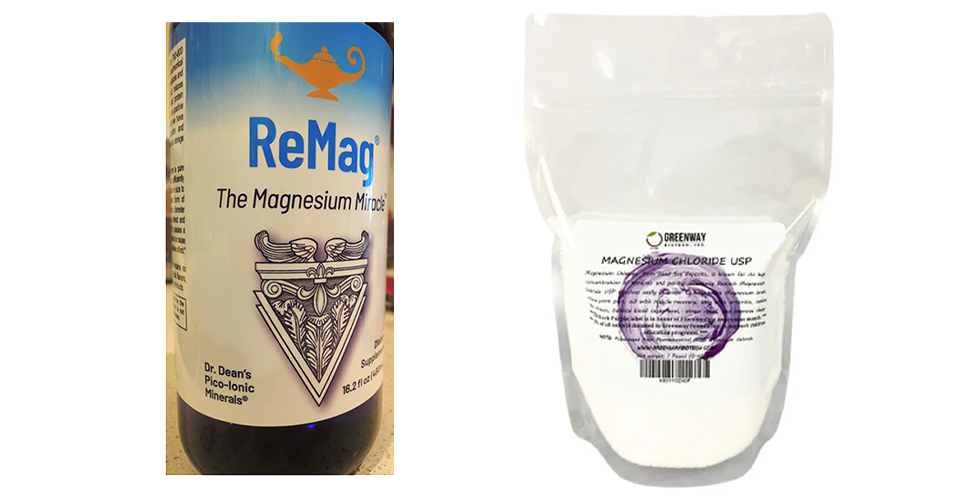
Initially, Jeremy purchased ReMag, an overpriced magnesium chloride solution. (See photo below.) This company had a lot of sciencey-sounding hype on their website.

I simply bought much cheaper food-grade magnesium chloride crystals in two-pound bags from Greenway Biotech. I calculated how much of the crystals were needed to supply what ReMag did per dose, weighed it on a kitchen scale, dissolved it in water, and gave it to our son. You can also find mixing instructions on the Greenway Biotech site.

If you do buy the crystals, make sure you keep the bag or jar tightly closed because magnesium chloride is very hygroscopic (it soaks up humidity and becomes a wet, sticky mess, especially during the humid summer months).

remag and mag chloride

Left: ReMag available on Amazon. 

Right: Magnesium chloride crystals available at Greenway Biotech.

Depression and anxiety support

ALS wreaks havoc on the patient’s mental health. Jeremy suffered from severe depression and anxiety at times and turned to both prescription and non-prescription for relief.

Antidepressants

Jeremy took bupropion for depression as well as lexapro for both depression and anxiety. He also took xanax for his frequent panic attacks.

Marijuana

Our son had a prescription to buy medical marijuana in New Jersey. I subsequently got the corresponding caregiver ID card so I could also go into a dispensary.

Our son initially tried smoking marijuana extracts in a vaping pen, but after a short while, he could no longer hold the pen or inhale. He also tried smoking the actual weed but couldn’t hold the tubing to his mouth or inhale.

I set up a small laboratory in my basement to follow the procedures I found online for making an extract. After mixing it with vegetable oil, I could give it to our son through his feeding tube. It helped him relax.

Skin remedies

Jeremy suffered from skin-related issues, including itching and burning. We experimented with a number of remedies.

Cornstarch-based fake talc

We started using a cornstarch-based talc substitute baby powder on our son’s private areas to help keep him dry. I don’t remember the brand. However, because of normal sweating and inactivity, his private parts acquired an unpleasant odor within a short time after applying it.

I realized that bacteria normally accumulated there and feasted on the cornstarch (it is food after all) and broke it down to smelly components. We stopped using it and the odor disappeared.

No thank you.

A brand-name version of what we used: Johnson’s Baby Powder, Naturally Derived Cornstarch with Aloe & Vitamin E.

Aspercreme

Our son often complained that his forearms and back were burning. We applied Aspercreme lotion and spray. Besides the lotion soothing his skin, the lotion had lidocaine (a numbing agent).

The spray was useful on his scalp because we could hold the nozzle very close to his scalp and spray so we didn’t soak his hair.

Wear disposable gloves if you want to work Aspercreme into someone’s scalp or elsewhere because it will make your own fingers feel “weird” if it soaks into your own skin (my own personal experience).

Ivarest

For severe itching, this OTC poison ivy spray worked very quickly. Wear disposable gloves when applying. I use it on myself, too, for eczema.

Mometasone Furoate

For severe itching (prescription, we used the lotion version. It worked slower than Ivarest, but we used it when Ivarest didn’t work. Wear disposable gloves when applying.

Systane

Our son’s eyes burned whenever he had his violent yawning sessions because he squeezed his eyes so tightly that tears poured out.

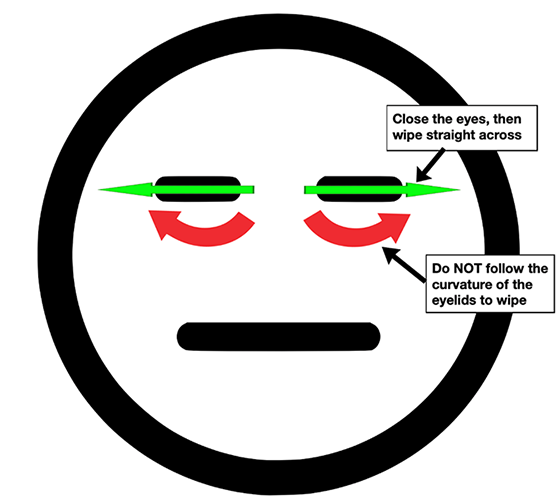
He requested that his eyes be wiped dry in a very specific manner (see diagram below): Wipe from the inside corner of the eye straight across the closed eyelid to the outside corner. He explicitly told us not to follow the curvature of the eye lids.

We had to apply a little pressure while wiping to absorb the tears. We used OTC eye drops to moisten his eyes whenever necessary. Also at night, we put Systane in his eyes (Systane is just an overpriced mixture of Vaseline and mineral oil) because they became super dry at night.

wiping eyes

Our son’s preferred method for wiping his eyes.

Elimination support

Neither OTC treatments nor prescription stool softeners work for ALS victims. Stool softeners are primarily used to prevent constipation (hard stools that are very difficult to pass). They are supposed to soften the stool by actually working with the food you are eating, not with the digested food that has already left the stomach and is in the intestines. That’s why the term “stool softener” isn’t quite correct: it doesn’t soften the stool, but rather softens what’s going to become stool.

The trouble with laxatives, stool softeners like Miralax, and even fiber-containing foods like dates, prunes, raisins, and so forth, is that if the patient doesn’t consume enough liquids with these treatments and foods, they have to soak up the water in the stomach and intestines to expand. Consequently, all the waste that’s sitting there dries out, making it harder and more difficult to pass. When taken while eating, these foods and meds make the stool softer, but don’t help it move.

If an ALS patient can’t pass stool, it is because the disease has destroyed the intestinal muscles that are needed to move it along. It has nothing to do with hardness of the stool. Our son had trouble passing soft stool too. 

From my Facebook experience reading posts from ALS victims and caregivers about “constipation,” most people don’t understand what’s really going on and they keep administering all kinds of softeners, but nothing happens.

The ALS doctors, nutritionists, and dieticians should have explained all this to their ALS patients, but obviously not. The softeners only make the waste soft or mushy. As a result, the patients begin losing their appetite because the stomach can’t empty into the intestines because the intestines are packed and backed up.

If you have a tunnel with a traffic jam at the exit, you can’t fit more cars into the entrance.

We discovered the only effective remedy: We gave our son countless enemas to flush out the waste, and even those sometimes didn’t work. We found that the only thing that helped our son was gravity moving the waste downward.

If the ALS patient is in a facility of some sort, you probably should review what they’re feeding him. If they’re just pouring those white watery chemical concoctions into a gravity feeding bag, that might be part of the constipation problem too. You must be the patient’s advocate and defender because no one at these facilities cares, other than to be paid.

Tolterodine

Our son took tolterodine to control his bladder. However, he had so much difficulty urinating, that I wonder if we should have stopped this med. Link: .

Stool softener + senna combo

Jeremy took a combo pill of these two. Toward the end of his life, he had no muscles left in his alimentary canal or bladder to move food waste out of his body. Somedays he spent hours on the toilet. There are a lot of products out there to soften stool, but nothing worked well.

Quackery: Buyer beware!

When you’re an ALS patient or loved one, it’s understandable that you would grasp at any medication or treatment that sounded promising. But I encourage you to be careful. Jeremy invested a lot of money in treatments that had little to no science behind them and ultimately did nothing for him.

Stem cell clinics

Thinking of going to a stem cell clinic? DON’T!

Many clinics are illegal and potentially harmful. To stay safe, make sure that any stem cell treatment you are considering is either FDA-approved or being studied under an Investigational New Drug Application (IND), which is a clinical investigation plan submitted and allowed to proceed by the FDA.

Jeremy went to a stem cell clinic in Great Neck, New York, and its other branch in New York City. Each of the two visits was about $9,000–$10,000. The “doctor” in the Great Neck location actually coughed in my son’s face while working on him and also dropped a bandage, picked it up, and applied it.

My wife and I went with Jeremy to another stem cell clinic in Costa Rica. Twice. The two visits for the three of us (flights, hotels, meals, treatments) cost around $50,000–$60,000).

Were stem cells really harvested at the two clinics? Were they really treated or did the doctors just inject colored water into Jeremy’s spine?

The places were dirty. The only thing accomplished was transferring money into the pockets of the so-called doctors. There was no improvement. Our son was buying very expensive hope.

I think stem cell clinics hoodwink patients in their advertisements by alluding to some vague “science” connections to stem cells and ALS and neurons and leave it to the victims to connect nonexistent dots from one concept to the other. These clinics prey on ALS sufferers and fail to present any science backing up their statements.

If you still want to spend money, donate what you were planning on wasting at a stem cell clinic to a legitimate ALS organization so they can continue to fight ALS.

Oral stem cell therapy

I learned in December 2022 about another dubious treatment: oral stem cell therapy. This quackery claims that stem cells can be taken orally. Stem cells are alive. Stomach digestive juices are very acidic. Any and all stem cells that are swallowed would just be destroyed and digested in the stomach. Don’t waste your money.

Homeopathics

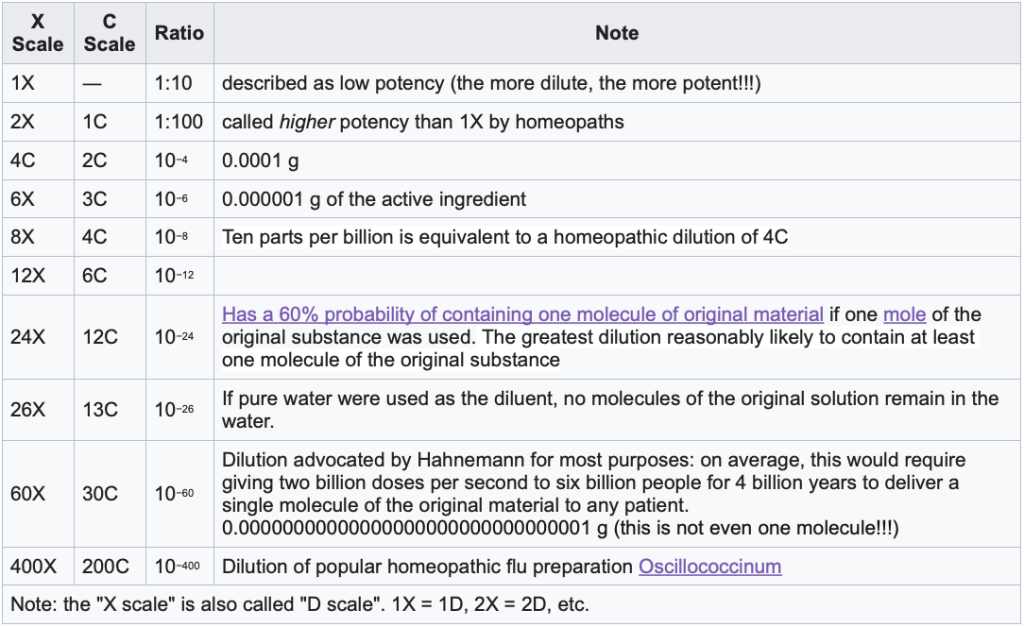
Homeopathic medicines are just water. The original medication has been diluted so heavily that there’s essentially nothing present, just water. It’s nonsense.

Our son was getting a homeopathic infusion even though he knew what I thought of it. No improvement. There are always doctors out there willing to prostitute themselves for money. If a doctor prescribes a homeopathic medicine, fire him. Again, our son was buying hope.

Jeremy was also getting other things from a dubious practitioner in Germany for infusions. I looked at that the guy’s website, but his medical explanations sounded like science fiction. I even emailed him questions, but his answers made no sense.

Here’s a more technical discussion of this nonsense for those who are interested. It comes from “What You Need to Know About Homeopathic Medicine”, which is found at the link: https://www.verywellhealth.com/homeopathic-medicine-description-2249111. (Note: I bolded below what I wanted to stress.)

“Homeopathic medicine is a form of complementary and alternative medicine (CAM) that uses very small amounts of natural substances that, at higher amounts, may cause a disease or symptom. Homeopathy is used to treat a wide variety of ailments, including colds, upset stomachs, pain, and menopausal hot flashes. However, there is limited evidence proving the effectiveness of homeopathic treatments.

“For example, if you have insomnia, a homeopathic remedy may be a very weak solution containing coffee. The [homeopathic remedy is made by taking the] starting material [e.g., the coffee, which] is diluted over and over again and forcefully shaken. The thought is that diluting and agitating (vigorously shaking) an ingredient activates its curative powers and enhances its effect.

“These dilutions may happen several times before a homeopathic remedy is given. For example, a 3C solution is diluted on the C scale (1:100) one time, then shaken up. Then it’s diluted (1:100) a second time and shaken, then a third time. The resulting solution has only a few molecules of the original ingredient left. Skeptics have described this as the equivalent of dissolving one Advil (ibuprofen) in the ocean and then drinking a few drops.

“Results on the effectiveness of homeopathic remedies have been inconsistent, primarily due to the lack of widespread regulations of the practice. By contrast, a 2017 meta-analysis found there was no single clinical medical condition for which there is reliable evidence that homeopathy is effective. And a large 2018 review looked at the common claims that homeopathic medicines can prevent or treat respiratory tract infections in children. The authors said they found no evidence these treatments work. Due to a lack of detailed reporting in earlier studies, they couldn’t draw conclusions about their safety. However, homeopathic products have not been reviewed by the Food and Drug Administration (FDA) for safety or effectiveness in diagnosing, treating, curing, preventing, or mitigating any diseases or conditions. In addition, since homeopathic treatments are not FDA-approved, they may not meet modern standards for safety, effectiveness, and quality. Some products have been found to contain higher doses or ingredients other than those listed on the label. Homeopathic remedies should not replace conventional treatments for most medical conditions. There is little evidence to prove homeopathy works, and trying homeopathy first may delay treatments backed by well-designed studies. However, there isn’t a standard medical license for practicing homeopathy.”

Here’s an entry on homeopathic dilutions from Wikipedia, https://en.wikipedia.org/wiki/Homeopathic_dilutions. As you read downwards in the table, the concentration of any actual medicine in the dosage gets more dilute, but the quacks claim that the treatment becomes more potent!
Real and Fake Medications and Treatments - Image 1.1

Vitamins, nutraceuticals, supplements

Deanna Protocol

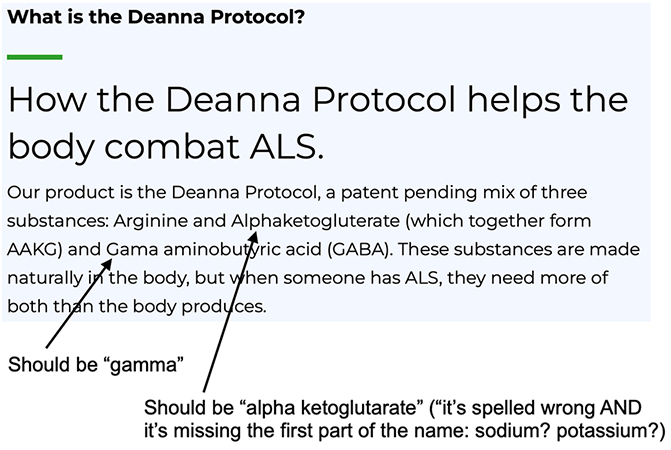
The Deanna Protocol is simply a mixture of three supplements. Maybe the mix will make you feel better, maybe not. See below for a screenshot from deannaprotocol.com/pages/the-science taken on 10.8.23. For such a sciency tab named “The Science,” there are chemical spelling and naming errors, which make me wonder how much science is known:

Deanna protocol 450

Screenshot from the Deanna Protocol website

Dr. Richard Bedlack at Duke University is a well-known ALS neurologist. He has evaluated many so-called treatments on his website ALSUntangled.com. Here is a summary of his evaluation:

Published: November 22, 2021

“Since our initial review, the ingredients in the Deanna Protocol (DP) appear to have changed. According to the product’s website (which now sells a one-month supply of it for $135.99 ), the current ingredients are Alpha Ketoglutaric Acid, L-arginine, and GABA.

“The rationale for this change is unclear. It does not change our Mechanisms grade. The mSOD1 mouse study we mentioned in our review has been published (PLoS One. 2014; 9(7): e103526). This study shows that treatment with some of the ingredients in a former version of the DP was associated with slowed progression and improved survival.

“Flaws in this study include lack of rater blinding and treatment initiation prior to symptom onset (not possible in patients). A newer publication (Int J Pharm Pharm Res. 2017 Dec; 11(1): 348–374) reported that one (but not another) version of DP could reduce a measure of stress in motor neurons from patients with familial ALS caused by SOD1 mutations and also in iPSC-derived-motor-neurons from patients with sporadic ALS that were treated with glutamate.

“It is not clear whether the raters in this study were blinded to treatment assignment. It is also unclear how relevant these cell models are to humans with ALS. Thus, neither of these new publications change our Pre-Clinical Grade of C. The DP website continues to report anecdotal evidence of benefit, but we have not been able to validate the diagnoses or reported benefits in any of these patients.

“Thus, our Cases grade remains D. We found no human trials of DP in patients with ALS so our trials grade is unchanged. We found no new reports of side effects, so our Risks grade remains B.

“Our conclusion remains unchanged: we cannot recommend DP as an ALS treatment. We hope to see a well-designed pilot trial in people living with ALS in the future.”

Essential oils and aromatherapy

From Johns Hopkins:

“Although people claim essential oils are natural remedies for a number of ailments, there’s not enough research to determine their effectiveness in human health. Results of lab studies are promising—one at Johns Hopkins found that certain essential oils could kill a type of Lyme bacteria better than antibiotics—but results in human clinical trials are mixed.”

Trolls

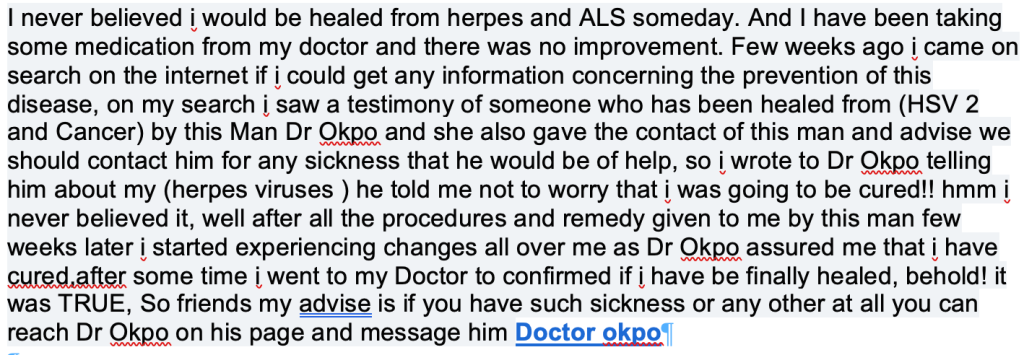
Here are two examples of herbal remedy replies (the English is usually not good) to legitimate posts in the ALS Facebook group:

ayurveda
Doctor okpo

Quite a number of disgusting people on the web have repeatedly placed fake ads for these types of cure-all remedies. They are just scams. They keep popping up on the Facebook group named “ALS – Patient and Caregiver tips for every day living” (they probably infect many other web groups too).

They are looking to sucker victims into sending money or into paying for fake treatments or are trying to trick people into sending personal information for further criminal actions. These fake ads usually claim to cure every disease under the sun and have very bad English and poor spelling. The names of the scam artists keep changing to bypass the Facebook group administrators.

One of the frequent contributors on this Facebook group, Mike Henson, posted a very good description of a troll:

“Common ALS real-world examples: (1) new or fake (often offshore) accounts that post lies such as ‘buy Dr. Sheister’s African ALS herbal cures,’ or (2) new or fake accounts that exist only to sell things like ALS shirts.

“Many times, a second troll will then post good things about the shirts or whatever they are selling in order to ‘back up’ troll #1. Trolls have many scams, all of which are designed to harass or discourage PALS [ALS victims] from fighting for things or to get money from desperate terminally ill people.”

As the old saying goes, “Caveat emptor” (Let the buyer beware).

The Facebook group administrators finally added the words “herb,” “herbal,” “extract(s),” and “essence(s),” among other words, to their filter list and have been successful in keeping the posts with fake remedies off the group. I have accidentally used the word “herbal,” and my post was immediately declined, so I know the filters work.

Just as a test of the filter, I decided to enter the name of a singing group I used to listen to from the 1960s: Herb Alpert and the Tijuana Brass. The post was immediately declined because the first six letters of the group’s name spells “herbal.” So there are obviously some flaws to the filter. I finally had to spell the group’s name with asterisks to post it. I wonder if someone with the name Herb every tried to join the group.

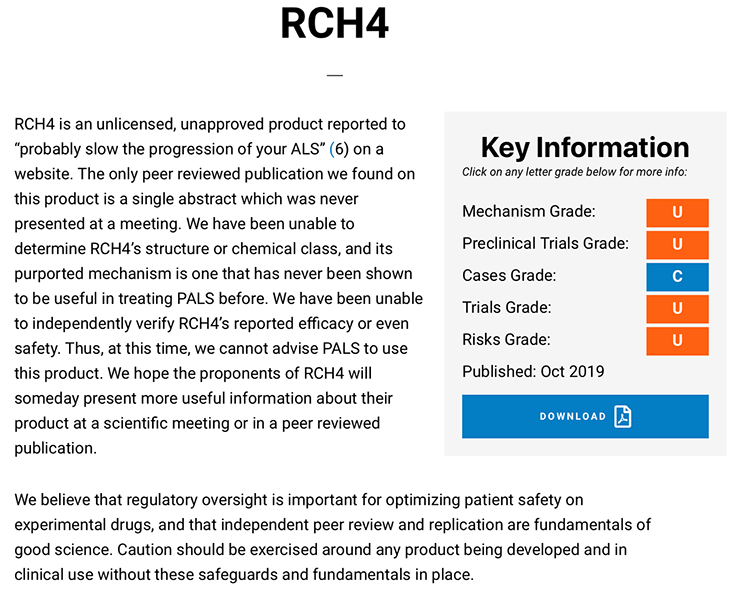
RCH4

This is a very mysterious treatment that I first heard about in September 2023. Here are some links from the people who are offering it: https://rch4als.com; https://rch4.org/about_rch4/ ; https://www.als-new-drug.com (with so-so grammar and misspellings).

They are offering something for nothing, so I would be very skeptical. A link to an unbiased review article is given on ALSuntangled.com.

The image below shows Dr. Richard Bedlack’s opinion of RCH4:

Quackwatch.org

For those of you who want to learn more about shady medicines and treatments, a great website is quackwatch.org. The website focuses on health frauds, myths, fads, fallacies, and misconduct, questionable products, services, and theories.

Baar wet cell battery for ALS

Another dubious treatment for ALS which consists of connecting the patient to a battery and running voltage through the patient’s body. Here’s the website selling the equipment: https://www.baar.com/baar-wet-cell-battery, including a book: https://www.baar.com/ALS-and-wet-cell-book.

An article on all kinds of quackery

https://hekint.org/2017/01/27/whats-old-is-new-again-quackery-in-the-age-of-the-internet/

A website and Facebook page regarding stem cell quackery and otherwise

Professor Paul S. Knoepfler, who has the www.ipscell.com website (a useful resource for people more generally considering going to stem cell clinics) wrote to me in an email: “The clinics are really taking advantage of people including very vulnerable patients. It doesn’t make sense to use the types of stem cells the clinics sell to try to treat ALS, but the clinics just keep on selling. The FDA has had a tough time keeping up and state medical boards are AWOL on this.”

Here is a link to a list of stem cell journals on the ipscell website:
https://ipscell.com/2024/11/list-of-regenerative-medicine-stem-cell-journals/

A book about Quackery

“If It Sounds Like a Quack…: A Journey to the Fringes of American Medicine” by Matthew Hongoltz-Hetling 2023. I reviewed this book at this link: https://www.goodreads.com/book/show/61904417-if-it-sounds-like-a-quack

BodyScience

This website, “https://www.bodyscience.life/als-program, uses a huge amount of “sciencey” words and explanations to snow you. They mention stem cell therapy and restoring mitochondrial efficiency.
The cost? $7500 – $8500 per week and they suggest at least 3 weeks!

Diaphragm pacing

The title of an article in Nature Reviews Neurology, Vol 11, page 484 (2015) “Diaphragm pacing is associated with reduced survival in ALS patients with respiratory insufficiency” should scare anyone considering this.

Apple cider vinegar

Another example of a snake oil remedy is apple cider vinegar (ACV). There are even apple cider vinegar pills, capsules, and gummies. Since vinegar is a liquid to start with, any dry formulation, such as a gummy, a capsule, or a pill can’t possibly have too much ACV since it will just be a wet mess. That means that the amount of actual ACV must be pretty small in the formulation.

Here’s an article from the New York Times, (which I think doesn’t go far enough to trash ACV): ”Is Apple Cider Vinegar Really a Cure-All?” https://www.nytimes.com/2024/04/09/well/eat/apple-cider-vinegar-benefits.html

My wife and I saw a 2025 movie entitled “Apple Cider Vinegar”, which was based on the book, “The Woman Who Fooled the World: The True Story of Fake Wellness Guru Belle Gibson”, by journalists Beau Donelly and Nick Toscano. The movie follows a wellness guru who pretends to be very unwell, but was convicted of misleading and deceptive conduct. 

Search the Guide for ALS

Practical Guide to ALS - Logo